
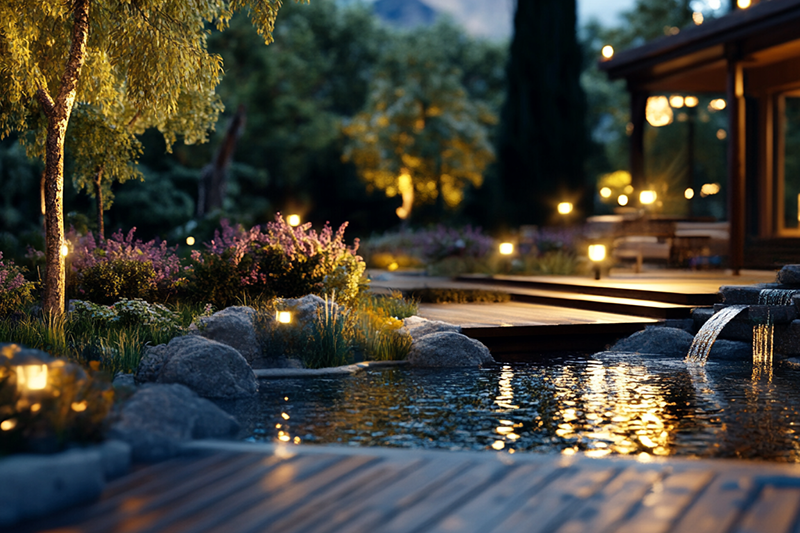
Landscape lighting is one of the best investments you can make for your home. It extends your living space into the evening, boosts security, and highlights the architectural beauty of your property.
But in the desert, not all lighting is created equal. The Arizona sun, shifting soil, and extreme summer temperatures are brutal on exterior systems. Choosing the wrong installer doesn't just result in a poor design—it often leads to a system that fails within two years.
When you’re ready to illuminate your desert oasis, use this guide to ensure you’re hiring a professional who can deliver a system that lasts.
- Do They Understand "Desert-Tough" Materials?
In many parts of the country, plastic or thin aluminum fixtures might last five years. In Scottsdale or Gilbert? They won't make it through two summers.
Ask your installer what materials they use. A quality desert installer will prioritize:
Solid Brass or Copper: These metals handle the heat without becoming brittle and develop a beautiful natural patina.
LED-Integrated Fixtures: These run cooler than traditional bulbs, which is vital when the ambient air temperature is already 110°F.
Powder-Coated Finishes: If they use aluminum, it must be high-grade powder-coated to prevent oxidation and peeling.
- Is Lighting Their Specialty or a Side Job?
Many general landscapers offer "lighting" as an add-on service. However, professional lighting is a blend of electrical engineering and artistic design.
A dedicated lighting specialist understands voltage drop (ensuring the last light on the line is just as bright as the first) and beam spreads (choosing the right angle to light a tall Saguaro versus a wide Palo Verde). If your installer just wants to "stick some lights in the ground," you likely won't get the dramatic, layered look your home deserves.
- Ask About Their Installation Standards
What happens underground is just as important as the fixtures above it. A professional installation should include:
Proper Trenching: Wires should be buried deep enough to avoid damage from gardeners or pets.
Waterproof Connections: Monsoon season can wreak havoc on poorly sealed wire nuts. Ask if they use heat-shrink or grease-filled connectors.
Load Balancing: Are they using a high-quality transformer with enough "headroom" to allow for future expansion?
- Look for "Design First" Thinking
Before a single shovel hits the dirt, a great installer should talk to you about how you use your yard.
Do they mention Zoning? (e.g., keeping the security lights on all night while the patio accent lights turn off at 10 PM).
Do they prioritize Glaring? (Ensuring you see the effect of the light, not the bright bulb itself).
Do they understand Color Temperature? In the desert, 2700K–3000K (Warm White) is the gold standard. Anything cooler can make our beautiful stone and stucco look like a sterile hospital wing.
- Check the Warranty and Maintenance Plan
The desert environment is a moving target. Plants grow, dirt shifts, and lenses get dusty. A reputable installer will stand by their work with a solid warranty on both the fixtures and the labor. Even better, ask if they offer a maintenance plan to keep your system adjusted and cleaned so it looks as good in year five as it did on night one.
Why Choose Desert Exterior Lighting?
At Desert Exterior Lighting, we don’t just install bulbs—we design nighttime experiences. We live and work in the Arizona heat, and we know exactly what it takes to build a system that thrives in our climate.
Ready to see your home in a new light? Contact us today for a free design consultation.