
Living in Arizona means you learn pretty quickly that not everything is built for our climate. Cars fade faster, patio furniture cracks, and cheap outdoor fixtures rarely survive more than a summer or two. Landscape lighting is no different. I have replaced a lot of lights over the years that were never meant to handle Phoenix heat, dust, and monsoon storms. That is why choosing the right type of landscape lighting matters so much here.
When lighting is designed specifically for the Arizona environment, it lasts longer, performs better, and looks the way it should year after year and when it is not, homeowners end up frustrated and paying more for down the road.
Why Arizona Heat Is Hard on Outdoor Lighting
Arizona summers are brutal on outdoor materials. Daytime temperatures regularly push past one hundred degrees, and surfaces like rock, concrete, and stucco hold that heat well into the night. On top of that, we deal with dust, sudden rain, and occasional flooding during monsoon season.
Cheap fixtures tend to fail fast in these conditions. Plastic housings warp. Seals dry out. Internal components overheat. Even wiring can degrade if it is not properly rated and protected. That is why the type of light and the materials used are just as important as where the light is placed.
LED Lighting Is the Standard for a Reason
LED lighting is hands down the best option for landscape lighting in Arizona. Older halogen systems generate a lot of heat on their own, which only adds to the stress caused by our climate. LEDs run cooler, use far less energy, and last significantly longer.
Another big advantage of LED lighting is consistency. Quality LEDs maintain their color temperature over time. Cheaper bulbs tend to shift color as they age, which can make a yard look uneven. In a desert landscape where lighting is often subtle, that consistency makes a big difference.
When properly designed, LED systems also reduce strain on transformers and wiring. That means fewer issues down the road and a system that performs reliably year after year.
Solid Metal Fixtures Hold Up Best
One of the first things I look at when selecting fixtures for an Arizona landscape is the housing material. Solid brass and high quality aluminum fixtures perform far better here than plastic or thin composite materials.
Brass fixtures handle heat extremely well and develop a natural patina over time instead of degrading. Aluminum fixtures can also perform well when they are powder coated and designed for outdoor use. The key is avoiding cheap materials that become brittle or fade under constant sun exposure.
Warm Light Works Better in the Desert
Color temperature is another area where Arizona lighting needs special consideration. Cool white lighting tends to feel harsh here, especially against stone and stucco. It can make outdoor spaces feel sterile and uncomfortable.
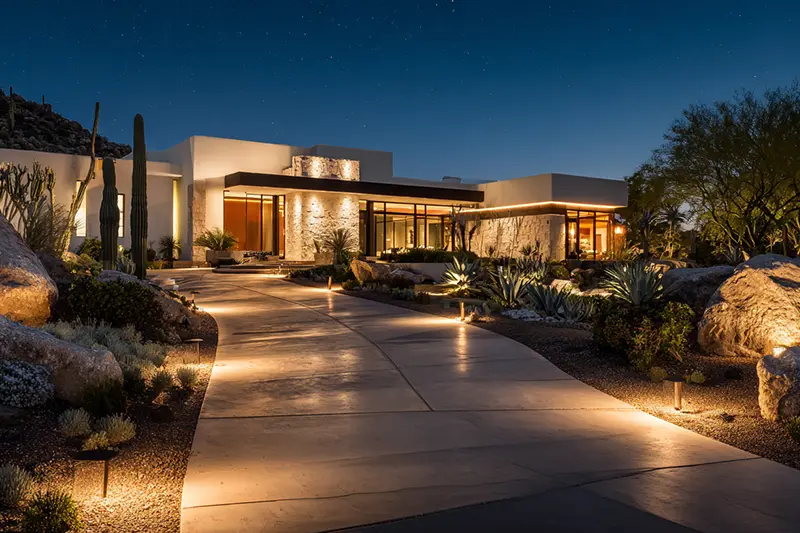
Warm white lighting creates a more natural look that complements desert landscapes. It brings out texture in walls, highlights plants without washing them out, and creates a softer atmosphere overall. This is especially important in backyards and patios where people want to relax in the evening.
The right designer knows how to balance warmth with visibility so the space feels comfortable without feeling dim.
Low Voltage Systems Are a Must
Low voltage landscape lighting systems are ideal for Arizona homes. They are safer, more energy efficient, and easier to control than line voltage systems. When installed correctly, they also handle temperature changes better.
Low voltage systems allow for better control over brightness levels, which helps prevent overheating and glare. They also make it easier to expand or adjust a system as a property changes over time.
This is especially helpful in Arizona, where homeowners often update landscaping or add outdoor living features like pergolas and fire pits.
Proper Installation Matters Just as Much
Even the best fixtures will fail if they are installed incorrectly. In Arizona, wiring needs to be buried properly and protected from heat and shifting soil. Fixtures need to be aimed so they do not trap heat or collect debris.
I always walk a property at night to make adjustments. The desert looks very different after dark, and small changes in angle or brightness can make a big difference. That attention to detail is what helps lighting systems survive our climate and still look good years later.
Why Experience Makes the Difference
Arizona is not forgiving when it comes to outdoor lighting. Experience matters here more than in many other places. A designer who understands the heat, the soil, and the way people use their outdoor spaces can design a system that lasts.
At Desert Exterior Lighting, every system is designed with Arizona conditions in mind. I choose fixtures that can handle the heat, use LED technology that performs consistently, and design lighting layouts that feel natural in the desert environment. The goal is always long term performance, not just a good first impression.
Choosing Lighting That Lasts
The best landscape lighting for Arizona heat is lighting that is designed specifically to withstand the rigors of the AZ summers. LED systems, solid metal fixtures, warm color temperatures, and thoughtful installation all play a role. When those elements come together, the result is a lighting system that enhances the property instead of becoming a maintenance headache.
If you are investing in landscape lighting, make sure it is built for the desert. When you choose the right materials and the right designer, your lighting will not just survive Arizona heat. It will thrive in it.