
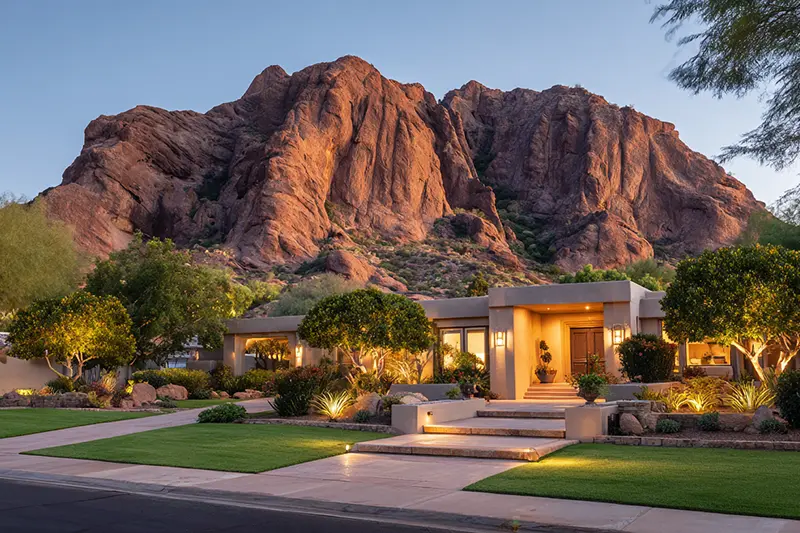
If you’ve spent time in the Valley, you know our outdoor spaces are special. We use our backyards almost all year, which isn’t the case in many other places. Here, outdoor lighting isn’t just for a summer BBQ. It helps make your space comfortable and inviting after sunset, especially when the weather cools down.
I’ve gathered some thoughts on outdoor lighting from my experience working in Phoenix. This isn’t a sales pitch—just honest tips that could help if you’re considering adding or updating your outdoor lights.
Why Lighting Matters More Here
Safety is the first thing that comes to mind. Uneven pavers, steps down to a pool, and gravel paths are easy to walk on during the day but can be tricky at night. I’ve heard from many homeowners whose guests have tripped on things they couldn’t see, and that’s never fun.
But really, the main reason people want outdoor lighting here is to make their living space bigger. From October to April, evenings are great for being outside. If your backyard gets dark as soon as the sun sets, you lose a lot of time you could be enjoying. Good lighting lets you grill, have friends over, or just relax outside without needing your phone for light.
Security is important as well. Like any city, Phoenix has property crime, and a well-lit yard helps get rid of dark spots that can attract problems. I often get asked to add motion-activated lights near side gates and in the darker corners of yards.
Different Types of Fixtures and Where They Work
There’s no one-size-fits-all answer, but here’s how different types of lighting are usually used in Phoenix homes:
Path lights are probably the most common type. They line walkways, driveways, and patio edges. The trick is to space them so you get even light without making it look like an airport runway. In the desert, I often see them along decomposed granite paths or around raised planter beds.
Uplighting can really transform a desert landscape. Saguaros, mesquite trees, and palo verdes all look great when lit from below at night. This is often the biggest change you can make to how your yard looks. Sometimes, one uplight on a mature saguaro does more than several random fixtures.
Downlighting works well for larger trees. You can place fixtures up in the branches and let the light shine down, creating a soft moonlight effect that’s gentler than lighting from below.
Hardscape lights are built into walls, steps, and seating areas. They make things safer where the ground changes height and add depth to outdoor kitchens and fire pits.
Spotlights are usually aimed at architectural features, entryways, or special focal points in the yard. Just be careful not to use too many, since that can make everything look harsh.
Planning It Out
Before you buy lights or hire anyone, spend a few evenings in your backyard after dark and see what you actually need. Where do people walk? What do you want to see from inside? Where are the dark spots that bother you?
The color oThe color of your lights matters. Bright white or blue LEDs might seem like a good idea because they’re bright, but they aren’t comfortable to sit near. Most outdoor lighting here uses warmer colors, around 2700K to 3000K, which look more natural and are easier on your eyes.etty much the standard now. The energy savings are real, and in Phoenix where everything runs hot anyway, LEDs generate way less heat than halogen did. They also last a lot longer, which means less time on a ladder swapping bulbs.
Think about how you’ll control your lights. Many systems can be managed from your phone or set up with timers and sensors. It’s handy to have lights turn on at sunset and off at midnight or whenever you go to bed.
Doing It Yourself vs Hiring Someone
I’ll admit, I’m in this business, so I’m a bit biased. But honestly, some of this is totally doable on your own if you’re handy. Low-voltage path lights from a home improvement store? You can probably set those up with a YouTube video and an afternoon.
Where it geIt gets tricky when you have more fixtures, longer wire runs, or anything that needs to be hardwired. Voltage drop can be a real problem on longer runs, so you might end up with bright lights near the transformer and dim ones farther away. Fixing that takes some calculations and wire sizing that most homeowners don’t want to deal with. another important part. It’s easy to use too few or too many lights if you’re not used to planning it out. I’ve seen yards where someone bought a pack of solar lights and put them everywhere, but it ended up looking uneven. Having a professional create a plan usually gives better results.
There’s also the issue of electrical codes. Arizona requires permits for some electrical work, and anything connected to your main panel must be done correctly. It’s not worth risking safety to save a little money.
Maintaining What You Have
Outdoor lighting in Phoenix takes a beating. The sun is intense, monsoon storms bring dust and debris, and UV rays wear down almost everything over time.
Clean your fixtures a few times a year. Dust and hard water can dim the lights more than you’d think. Check connections at the start of each season, especially after monsoon storms. Trim plants that grow over the lights, since they can cover them up quickly during the growing season.
Most LEDs last for years, but if they start to dim or flicker, replace them before they go out completely. Also, check your transformer from time to time to make sure it isn’t overloaded or wearing out.
Bottom Line
Outdoor lighting in Phoenix is all about making your outdoor space useful after dark. We have great weather most of the year and beautiful landscapes that look even better at night. Whether you do it yourself or hire someone, it’s an upgrade you’ll use every day, not just something that looks good in photos.
If you have questions or want to talk about ideas, feel free to reach out. I’m always happy to chat about what might work for you.