

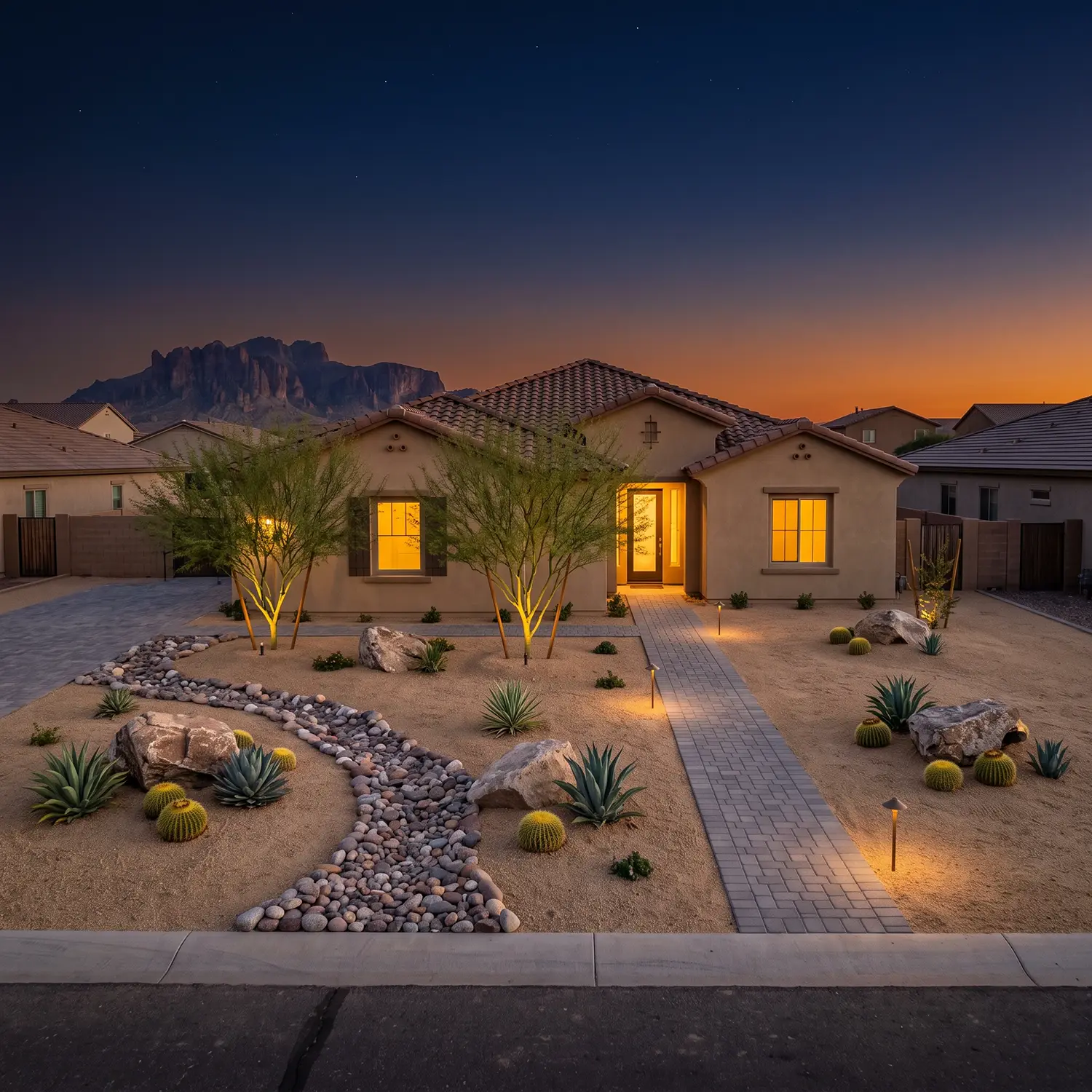
I get a certain phone call every spring and fall and it goes about the same way every time. Somebody had their yard redone, the new landscaping looks great, and half the lights don't work anymore. Sometimes none of them work, or the landscaper pulled every fixture out and left them in a pile by the side gate and they want to know if we can put them back.
Usually we can. But it's a lot cheaper and easier if I hear about the project before it starts.
What happens to the lighting
Low-voltage wire gets buried, usually around six inches down, running from fixture to fixture and back to the transformer. That's plenty deep for normal life in a yard. It's nowhere near deep enough to survive a trencher putting in new drip lines or a skid steer scraping out an old lawn.
The crews mostly aren't being careless. They just don't know the wire's there, because nobody told them and you can't see it, and the first they find out is when the trencher catches it and yanks up ten feet of cable. Some landscapers are really good about asking first. Plenty of them aren't.
Know where your wires are
If we did your original install, call us and we can tell you where the runs go, or come out and flag them before the crew starts. If you inherited the system from whoever owned the house before you, there's a decent chance nobody knows where anything goes, and that's worth a quick visit to trace it first.
Either way walk your landscaper through it before they dig. Show them the transformer on the wall, point out the flags, and ask them to hand dig anywhere close to a line.
Pull the fixtures before demo starts
This is the one I push hardest. If a bed is getting torn out, it's much better for us to come out ahead of time and pull the fixtures from that area, with the wire coiled up and everything stashed in your garage until the new plants are in. Then we come back and set it all up for the new design.
Because your old lighting was aimed at your old yard. That queen palm got an uplight because it was the tallest thing in the bed, and if it's gone and a row of young palo verdes is going in instead, the fixture is now pointed at nothing. So re-aiming is part of the job no matter what.
New plants are small, too. A palo verde from the nursery might be eight feet tall on the day it goes in and twenty-five feet in ten years, so I light it for about where it'll be in a few years and then we adjust as it fills in.
Going from grass to gravel
A lot of the re-landscapes I'm seeing lately in Mesa and Gilbert are people ripping out the lawn and going desert, partly for the water bill and partly because they're tired of mowing in July. That's a big change for lighting and mostly a good one, since a lawn is flat and kind of boring to light and a desert yard full of boulders and agave and maybe a dry riverbed gives you a lot more to work with. If you're putting in a saguaro, I've got a whole post on how to light those without messing it up.
It's also when the old sprinkler heads come out, so it's a good time to move fixtures away from spots that used to get soaked every morning.
Sometimes I'd just start over
If your system is fifteen years old and still running halogen, with fixtures that are already corroded and wire that's been patched a few times, a re-landscape is honestly the best time to pull the whole thing out and put in something new. The yard's already torn up and the trenches are already open, and I'd rather put new LED fixtures on fresh wire than try to rescue hardware that's going to quit in two years anyway.
But if the system's in decent shape, reusing it saves you a good chunk of money, and most of what came out of the ground goes right back in.
— Sam
Desert Outdoor Lighting has served the Phoenix Valley since 2004. We're licensed and bonded (ROC# 340142) and install landscape lighting and Gemstone permanent trim lighting in Gilbert, Mesa, Chandler, Scottsdale, Tempe, Queen Creek and across the Valley. Call (480) 809-7800 or request a free after-dark design visit.