
You’ve seen the house I’m talking about. Drive through any neighborhood in Gilbert or Mesa around the holidays now and there’s always one. Permanent trim lights on the roofline, and they’re just… off. Too much. Blinking and chasing and color-cycling through the whole rainbow at nine o’clock on a random Tuesday in February. Looks like a slot machine bolted to a house.
And here’s the part that bugs me. The lights themselves are probably fine. The product is good. The problem is how it’s being run.
So let me talk about this for a minute, because permanent trim lighting is what we install a ton of, and there’s a real difference between a system that makes a house look custom and one that makes it look like a kid got the app and never put the phone down.
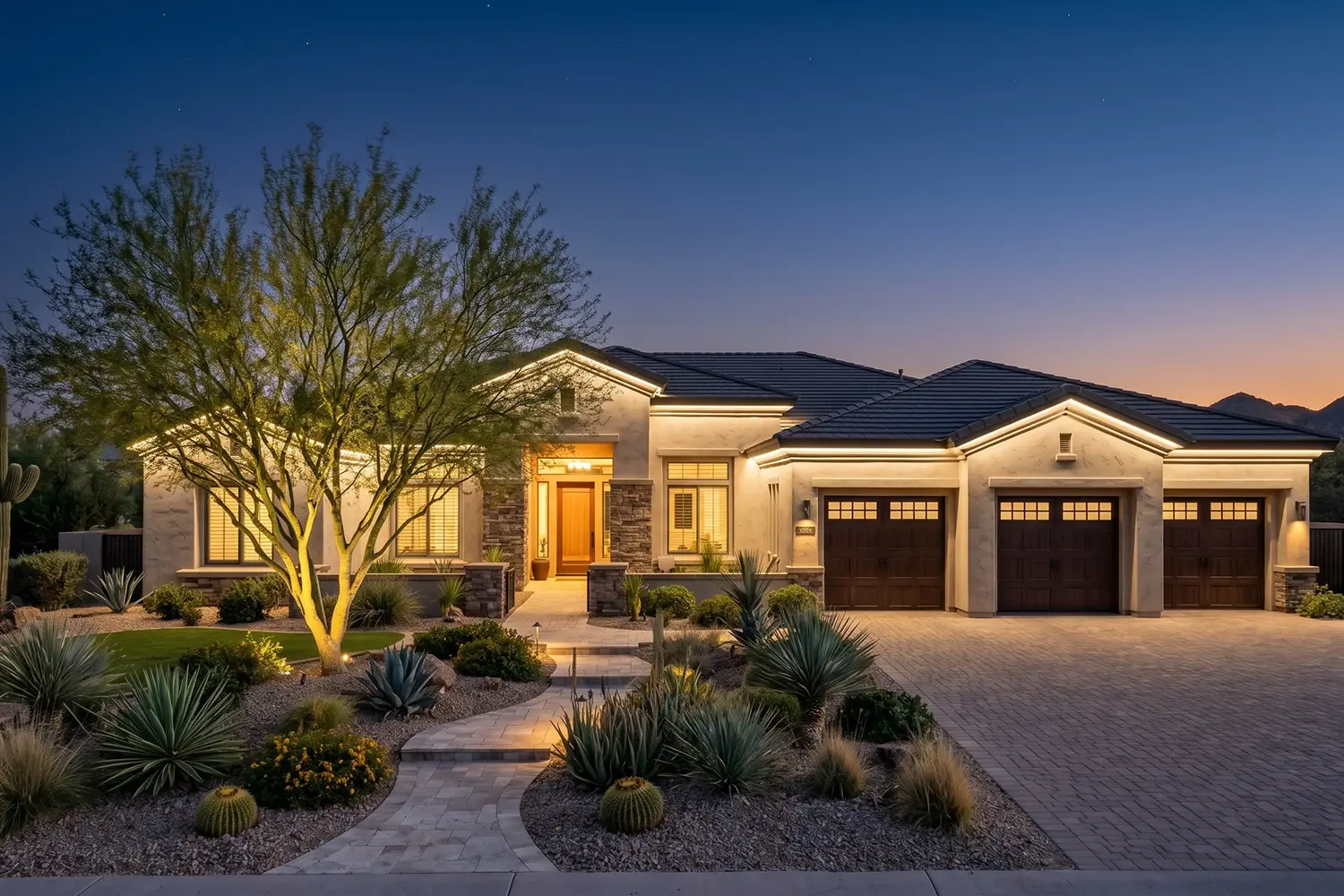
The number one thing is restraint. I know that’s not exciting. But it’s the whole game. These systems can do a million colors and forty animation modes and the temptation is to use all of them all the time. Don’t. The houses that look genuinely high-end run warm white most of the year. Just warm white, clean, hitting the roofline, making the architecture look good. That’s it. That’s the default. Then you break out color for the actual occasions — red and green at Christmas, orange and purple for Halloween, red white and blue for the Fourth. The color means something because it’s not on all the time.
The “always on rainbow” house has trained everybody on the street to ignore it. That’s the opposite of what you paid for.
Color temperature, when you do run white. This is a thing most people never even think about. There’s a warm white and there’s a cold blue-white and they are not the same and they do not look the same on a house. That harsh blue-white reads cheap. Every time. It’s the same light that makes a saguaro look like it’s in an emergency room. On a roofline it makes a nice stucco home look like a gas station canopy. Warm white, every time, for the standard look. The blue end is for special effects, not your everyday setting.
Animation. The chase effects, the twinkle, the fade. They have their place. Christmas, sure, run a slow chase, it’s festive, it’s fun. But there’s slow and tasteful and then there’s seizure mode. Fast aggressive blinking just looks chaotic. And running animation as your everyday year-round look is the single fastest way to make a beautiful install look like a dollar store. Slow it down. Use it sparingly. When in doubt, less movement.
And honestly that’s where a good installer earns it. Not just stapling lights up under the fascia — though doing that part clean matters too, straight runs, hidden track, no drooping. But also setting the thing up so it’s easy for you to run it right. Good presets. A “just make it look nice” warm white scene you can hit with one tap. The holiday scenes already built so you’re not fiddling with color pickers at midnight.
We use Gemstone Lights for our permanent trim installs and the hardware is genuinely good — individually addressable, weatherproof for what our sun does to everything, the track tucks up under the trim so in daylight you barely know it’s there. But I tell every customer the same thing. The product gives you the range. You provide the restraint. Or we set it up so the restraint is the easy default and you have to go out of your way to make it gaudy.
Most people, once they see their place in clean warm white for the first time, they get it immediately. They go, oh, that’s the look. That’s what I wanted. And then color at Christmas hits totally different because it’s a change, an event, not just Tuesday.
So if your trim lights look more carnival than custom, it’s almost never the lights. It’s the settings. And that’s fixable.
We do permanent trim lighting all over the Valley — Gilbert, Mesa, Chandler, Tempe, Scottsdale, Phoenix, Queen Creek. If you want a system that looks expensive instead of loud, that’s kind of our whole thing.